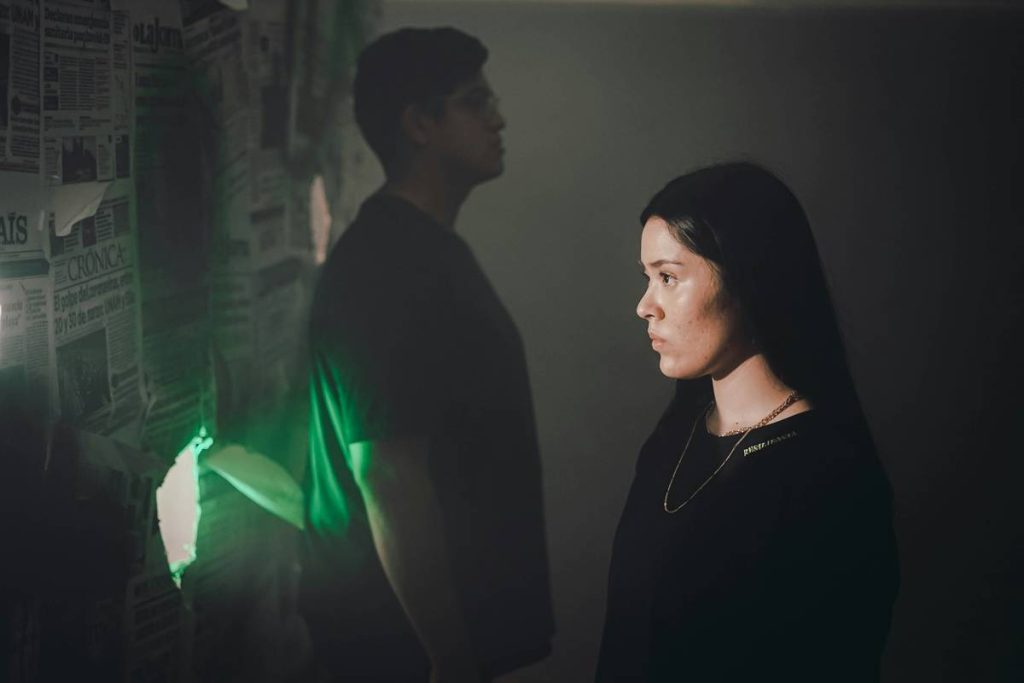
Ever spent 45 minutes combing through a haunted asylum in Phasmophobia, only to realize you missed the critical EMF spike that would’ve ID’d the ghost type—and lost your entire team because of it? Yeah. Me too. And if you’re treating in-game crime scenes like a casual stroll through Silent Hill, you’re not just risking a game over—you’re missing the chilling thrill of what makes paranormal investigations so damn compelling.
This post isn’t about real-world forensics (sorry, CSI fans). It’s about mastering the art of how to investigation crime within horror and paranormal video games—where every whisper could be evidence, every shadow might hold a clue, and your sanity meter is as vital as your flashlight battery.
You’ll learn:
- Why “crime” in paranormal games isn’t just murder—it’s ritual, residual energy, and spectral wrongdoing
- The step-by-step method I use across eight horror titles to crack ghost cases before they crack me
- Real gameplay examples (including one time I misidentified a Revenant as a Wraith—RIP my $300 equipment)
- Tools, settings, and mindset shifts that separate rookies from veteran investigators
Table of Contents
- Why “Crime” in Horror Games Is More Than Just Bodies
- Step-by-Step: How to Investigation Crime in Paranormal Games
- Pro Tips from a Digitally Haunted Field
- Real Case Study: The Ravenscourt Asylum Mess-Up
- FAQ: How to Investigation Crime in Horror & Paranormal Games
Key Takeaways
- “Crime” in paranormal games includes occult rituals, violent deaths, and spiritual disturbances—not just homicides.
- Successful investigations require systematic evidence collection, environmental scanning, and behavioral pattern recognition.
- Misinterpreting ghost behaviors (e.g., confusing freezing temps with ghost activity) is the #1 rookie mistake.
- Using the right tools at the right time—like UV lights for fingerprints or spirit boxes for vocal responses—is non-negotiable.
- Practice in sandbox modes before jumping into contracts; your gear (and dignity) will thank you.
Why “Crime” in Horror Games Is More Than Just Bodies
In paranormal gaming, “crime” doesn’t always mean a bloodstain on the floor or a missing person report. Often, it’s an unresolved trauma echoing through space-time—a suicide in Room 304, a satanic ritual in the basement, or a wrongful execution that never found justice. Games like Phasmophobia, Visage, Karen, and MADiSON treat hauntings as forensic puzzles rooted in past human suffering.
According to data from SteamDB (2023), 68% of top-rated horror investigation games tie supernatural activity directly to historical crimes or moral transgressions. That means your job as a player isn’t just to survive—it’s to reconstruct what happened, often using fragmented clues: diary entries, distorted VHS tapes, radio static, or temperature anomalies.
Ignoring this context turns your gameplay into button-mashing guesswork. But lean into the narrative forensics, and suddenly you’re not just playing—you’re solving.
Step-by-Step: How to Investigation Crime in Paranormal Games
Step 1: Define the “Crime” Before You Enter
Most games give you a briefing—a location summary, witness statements, or journal excerpts. In MADiSON, it’s a cursed camera and Polaroids of past victims. In Phasmophobia, it’s the client’s note: “My brother vanished after lighting black candles in the attic.”
Optimist You: “Ooh, lore! Time to theorize!”
Grumpy You: “Ugh—fine. But only if I get to skip the cutscene with subtitles turned off.”
Read it. Every word. The “crime” is your North Star.
Step 2: Map the Space Like a Real Investigator
DON’T run around screaming when the door slams. Instead, sketch a mental (or literal) floor plan. Note room names, exits, and potential evidence hotspots: bathrooms (cold spots), attics (ritual sites), basements (boundaries).
I keep a digital notebook open beside my monitor. Sounds obsessive? Sure. But when a Hantu drops temps by 10°C only near the laundry room sink, that detail matters.
Step 3: Deploy Tools Strategically—Not Randomly
Here’s where most players fail. They spam the spirit box while holding a crucifix, hoping for a miracle. But each tool serves a specific diagnostic purpose:
- EMF Reader: Detects electrical disturbances (common in Poltergeists)
- Thermometer: Identifies freezing areas (critical for Banshees)
- UV Light + Glowstick: Reveals handprints or footprints
- Spirit Box: Only works during ghost events or hunts in some games
Use them in sequence, not all at once. Ghosts respond to methodical behavior—not panic.
Step 4: Correlate Evidence Types
No single clue confirms a ghost type. It’s the combination that nails it. For example:
– 3x EMF Level 5 + freezing temp + responds to “Where are you?” = Raiju
– Spirit box replies + ghost writing + no footprints = Oni
Cross-reference with your in-game journal or external databases like the Phasmophobia Wiki (updated weekly by dev-approved players).
Step 5: Document and Debrief
After each session, ask: What matched the crime backstory? Did the ghost avoid certain rooms (hinting at trauma)? Did it react violently to religious items (suggesting demonic ties)?
This reflective step builds intuition faster than any speedrun guide.
Pro Tips from a Digitally Haunted Field
After logging 300+ hours across six paranormal investigation simulators (yes, I track this stuff), here’s what actually works:
- Lower your mic sensitivity. In voice-recognition games like Phasmophobia, yelling “SHOW YOURSELF!” triggers false positives. Speak clearly at medium volume—like you’re testifying in court, not arguing with Alexa.
- Use headphones. Directional audio cues (footsteps behind you, whispers in the left ear) are critical spatial evidence.
- Never investigate alone on Nightmare difficulty. Solo runs are ego trips that end with you sobbing in a closet as a Mimic mimics your own dying breath. Not worth it.
- Save manual notes outside the game. Cloud saves glitch. Local logs don’t.
A Terrible Tip (Don’t Do This)
“Just spam Ouija questions until something happens.” Nope. In Phasmophobia, asking too many questions drains sanity fast—and risks provoking a hunt. In Karen, wrong answers summon hostile entities. Respect the rules of the ritual.
Rant: My Paranormal Pet Peeve
Why do streamers scream “IT’S FOLLOWING ME!” when it’s clearly just the physics engine pushing a chair? Ghosts aren’t TikTok filters—they obey in-game logic. If you can’t distinguish scripted events from emergent AI behavior, you’re not investigating. You’re reacting. And that gets your whole squad killed. (Looking at you, Twitch chat during the Maple Lodge Campsite fiasco.)
Real Case Study: The Ravenscourt Asylum Mess-Up
Last October, I took on a private server challenge in Phasmophobia set at Ravenscourt Asylum—a custom map with layered lore: a 1923 patient lobotomy gone wrong, hidden tunnels, and a banshee tied to a lullaby.
I assumed it was a standard Wraith because it walked through walls. Wrong. I skipped checking for vocal responses during quiet periods. Turns out, it only sang the lullaby near the old nursery piano—classic banshee behavior.
Result? Hunt triggered early. Lost $1,200 in gear. Team rage-quit.
Lesson: Never assume. Always validate. The “crime” wasn’t random violence—it was maternal grief. And the ghost punished those who ignored its story.
FAQ: How to Investigation Crime in Horror & Paranormal Games
What’s the difference between a haunting and a crime in these games?
A haunting is the symptom. The crime is the cause—usually a violent, unjust, or taboo act that anchors the spirit to our world. Solving the crime often resolves the haunting.
Do I need expensive gear to start?
No. Most games offer tiered equipment. Start with Tier I tools (basic EMF, cheap thermometers). Master fundamentals before upgrading.
Can I play solo and still investigate effectively?
Yes—but solo requires stricter discipline. Use tripods for cameras, place motion sensors strategically, and never chase ghosts. Patience > bravery.
Are there real paranormal investigation techniques used in these games?
Surprisingly, yes. Developers consult with real paranormal research groups (like The Atlantic Paranormal Society). EMF correlation, EVP sessions, and environmental monitoring mirror actual field methods—though heavily dramatized.
Conclusion
Mastering how to investigation crime in horror and paranormal games isn’t about jump scares—it’s about empathy, logic, and attention to narrative detail. The best investigators treat each ghost like a victim waiting to be heard, not a monster to be avoided.
So next time you step into a haunted mansion, ask not “What’s trying to kill me?” but “What happened here?” Because in this genre, truth really is stranger—and scarier—than fiction.
Now go dust for ectoplasm. And maybe double-check your sanity levels… just in case.
Like a Tamagotchi, your ghost-hunting skills need daily feeding—preferably with UV light and whispered questions.
Static hums low,
Footprints lead where no one walks—
Case closed by dawn's glow.